
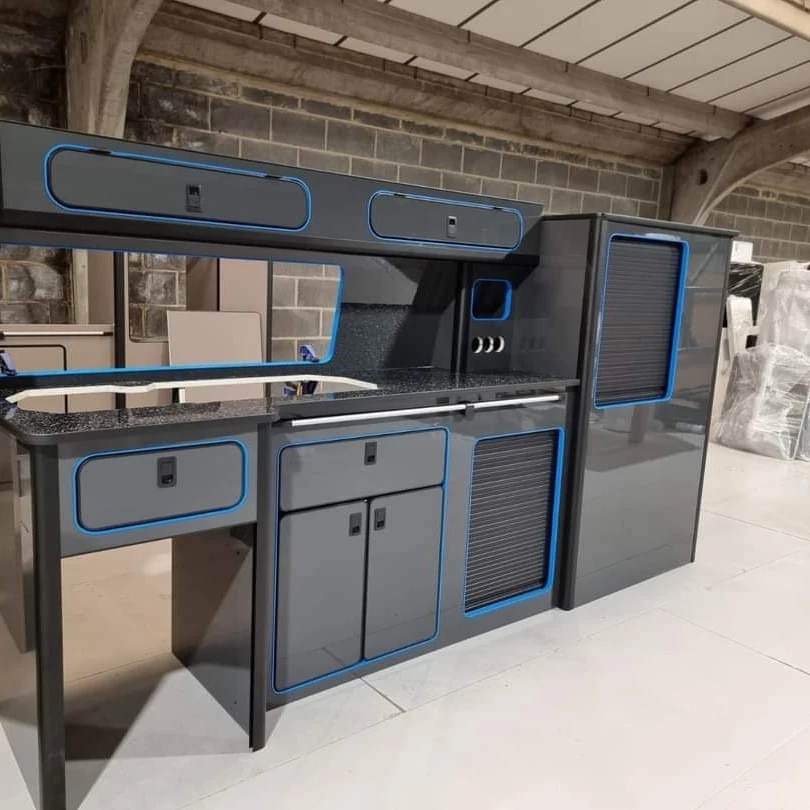
Tambour doors have been a staple in furniture and architectural design for centuries, offering a unique blend of functionality and aesthetics. Their distinctive rolling mechanism, which allows doors to slide seamlessly along a track, makes them an excellent alternative to traditional hinged doors. Whether in antique roll-top desks or modern camper vans, tambour doors have continually evolved to meet changing needs. In this blog post, we’ll explore the history of tambour doors, their advantages over contemporary alternatives, common questions about their use, and what the future holds for this innovative design.
Tambour doors have been around for centuries, with early examples appearing in 18th-century furniture design. The term “tambour” originates from the French word for “drum,” referencing the curved slats that roll smoothly when the door is opened or closed. Initially popular in roll-top desks, these flexible and space-efficient doors became widely used in cabinetry, armoires, and storage units.
During the 19th and 20th centuries, tambour doors became synonymous with office furniture, particularly in filing cabinets. Their space-saving qualities made them highly desirable in environments where accessibility and organization were key. In the modern era, tambour doors have found new applications in kitchens, camper vans, healthcare facilities, and retail spaces, proving their versatility and continued relevance.
While conventional swing doors have their place, tambour doors offer several advantages that make them a superior choice in many settings:
Unlike traditional cabinet doors that require clearance to swing open, tambour doors retract into a compact slot, making them perfect for small spaces such as camper vans, compact kitchens, and office storage solutions.
Tambour doors provide a sleek and modern look, available in a variety of finishes and materials, including aluminum, wood, and plastic. This versatility makes them suitable for contemporary and traditional interiors alike.
With no hinges or handles to wear out over time, tambour doors are a durable and long-lasting solution. Their sliding mechanism is designed for repeated use, making them ideal for high-traffic environments.
Many tambour doors come with locking mechanisms, offering secure storage for valuables. This feature is particularly useful in offices, retail spaces, and camper vans where security is a priority.
Available in various sizes, colors, and finishes, tambour doors can be customized to fit different design preferences and functional requirements, making them a versatile option for home and commercial use.
1. Are tambour doors easy to install?
Yes, most tambour doors come with straightforward installation instructions, making them suitable for DIY projects or professional installation.
2. Can tambour doors be used in humid environments like kitchens and bathrooms?
Absolutely. Many tambour doors are made from moisture-resistant materials such as aluminum or PVC, making them suitable for high-humidity areas.
3. Do tambour doors require a lot of maintenance?
No, maintenance is minimal. Regular cleaning with a damp cloth and occasional lubrication of the track system will keep them in excellent condition.
4. Are they only available in standard sizes?
No, tambour doors can be custom-made to fit specific dimensions, ensuring they work perfectly for your unique space.
5. Can they be painted or refinished?
Yes, depending on the material. Wooden tambour doors can be sanded and repainted, while aluminum and plastic variants may require special coatings for refinishing.
As modern interior design continues to prioritize space efficiency and aesthetics, tambour doors are poised to play an even greater role. With advancements in materials and manufacturing, we can expect to see even more lightweight, durable, and customizable options available. Additionally, as smart home technology grows, tambour doors could integrate with automated systems, providing touchless and motorized opening solutions.
Sustainability is also likely to influence the future of tambour doors, with an increasing emphasis on eco-friendly materials such as bamboo and recycled composites. This shift will ensure that tambour doors remain a stylish and responsible choice for homeowners, designers, and businesses alike.
From their origins in antique furniture to their place in modern architecture, tambour doors have stood the test of time. Their practical benefits, stylish appearance, and versatility make them a fantastic alternative to traditional doors in a wide range of applications. Whether you’re designing a camper van, upgrading your kitchen, or looking for secure office storage, tambour doors offer an innovative and space-saving solution.


